What Are Dental Crowns Made Of?
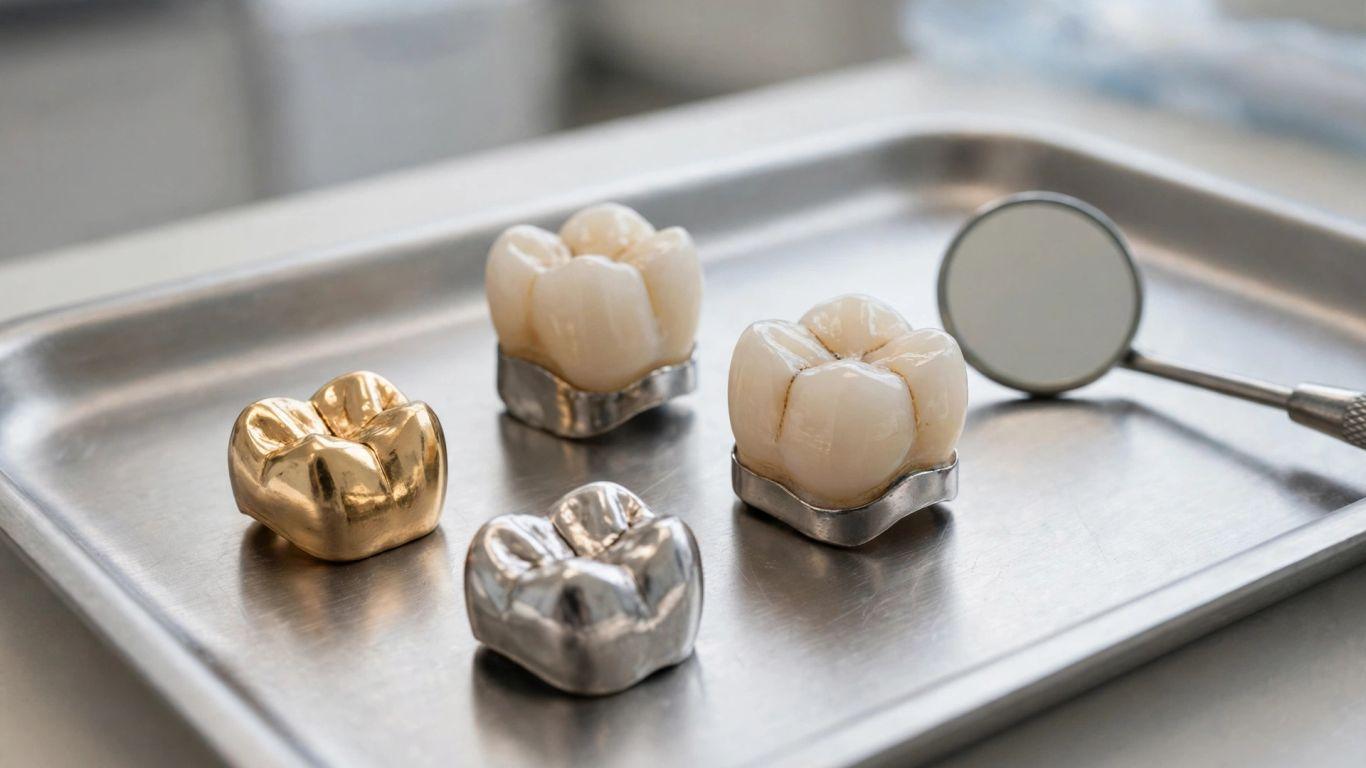
What dental crowns are made of
If you’re wondering what dental crowns are made of, the short answer is: several different materials can be shaped into a cap that covers a tooth. Common options include metal alloys, ceramics, and resin-based materials, each with its own balance of appearance, strength, and cost. The right choice depends on the tooth and your needs, not just which material sounds best on paper.
How a crown’s material differs from its cement
The crown is the visible, shaped restoration that fits over the prepared tooth. Cement is used to secure it in place; it is a separate material with a different job. Asking which crown material is planned is different from asking how it will be attached.
The main material groups: metal, ceramic, and resin
Metal crowns are made from alloys, or blends of metals. Ceramic crowns include several tooth-colored materials, such as zirconia, lithium disilicate, and feldspathic porcelain; they differ in strength and translucency. Resin-based crowns are another option, though their characteristics depend on the specific material and the case. See how we approach dental crowns and bridges at our Chino office.
Why crowns may combine more than one material
Some crowns pair a metal interior with a porcelain outer layer. This design aims to combine a supportive core with a tooth-colored surface, though the two materials may behave differently from a crown made entirely of one material. Your dentist can explain the specific construction being considered.
Metal crowns and porcelain-fused-to-metal crowns
Metal crowns and porcelain-fused-to-metal crowns both have a metal component, but they are not identical in appearance or construction. Some are made entirely of an alloy, while others have porcelain over a metal core. It is worth asking what material would be used for your restoration.
Gold and other noble metal alloys
Gold crowns are made from gold blended with other metals; other noble metal alloys may also be used. These materials have a metallic color, which can make them more noticeable than tooth-colored options. Their suitability depends on factors such as where the crown will sit and how it fits into your bite.
Base-metal alloys such as nickel-chromium
Base-metal alloys, including nickel-chromium, are another category used in some dental restorations. If you have a known metal allergy or have reacted to dental materials before, tell your dentist before choosing a crown.
Porcelain fused to a metal core
A porcelain-fused-to-metal crown has a metal core covered by porcelain. The porcelain provides a tooth-colored outer surface, while the underlying metal forms the core. A potential trade-off is that porcelain can chip, and a dark edge may become visible near the gumline in some situations.
All-ceramic and all-porcelain crowns
All-ceramic crowns are made without a metal core and include several materials with different optical and mechanical properties. Some can be matched to nearby teeth, but the final appearance depends on the material, shade, thickness, and the dentist’s and laboratory’s work. Ceramic is not a single uniform substance, so it helps to ask which type is being considered.
Zirconia for strength and durability
Zirconia is a ceramic often selected when strength is an important consideration. Its appearance can vary by formulation and design. Ask how the planned material fits the needs of your specific tooth.
Lithium disilicate for a natural-looking finish
Lithium disilicate is a glass-ceramic used for tooth-colored restorations. It can offer a natural-looking appearance, though the result depends on factors such as shade selection and how the crown is made.
Feldspathic porcelain for detailed front-tooth restorations
Feldspathic porcelain can be layered and shaped to create detailed color and surface effects. That makes it a material dentists may consider when appearance is a major concern, particularly for visible teeth. Its suitability also depends on the tooth’s function and the amount of force it will face.
How crown materials compare
There is no single material that is best for every crown. Metal, porcelain-fused-to-metal, and all-ceramic options differ in appearance, construction, and how they respond to forces in the mouth. The comparisons below describe general tendencies, not a guarantee of how an individual crown will perform.
Strength and resistance to chipping
Metal crowns do not have a porcelain surface that can chip, while porcelain-fused-to-metal crowns and all-ceramic crowns have ceramic components that may chip or fracture under some conditions. This table offers a broad comparison to help frame questions for your dentist.
| Crown type | General construction | Consideration |
|---|---|---|
| Metal | Metal alloy throughout | Metallic appearance; alloy varies |
| Porcelain-fused-to-metal | Porcelain over a metal core | Porcelain surface may chip |
| Zirconia | Ceramic | Strength and appearance depend on formulation and design |
| Lithium disilicate | Glass-ceramic | Tooth-colored option; suitability depends on the case |
The table is a starting point rather than a ranking.
Appearance and how well a crown matches nearby teeth
Tooth-colored ceramics can be selected and made to coordinate with surrounding teeth, although a perfect match is not always possible. Shade, translucency, gum position, lighting, and the condition of nearby teeth can all affect how natural a crown looks. If appearance matters to you, discuss it before the material is chosen. Our smile makeover page covers cosmetic planning.
Wear on opposing teeth and sensitivity concerns
The crown meets an opposing tooth whenever you bite, so the material and the way the restoration is finished may matter to both surfaces. Sensitivity can have several causes; it cannot be predicted from material alone. Tell your dentist about new or persistent discomfort so it can be evaluated.
How to choose the right crown material
Choosing a crown material is a shared decision between you and your dentist. The tooth’s location, the forces it must handle, your preferences, and the available restorative options all contribute.
Where the crown will sit and how much force it will take
A crown on a front tooth has different visibility concerns from one on a back tooth, where chewing forces are often greater. Consider these questions during your appointment:
- Will the crown be easy to see when I smile?
- What forces will this tooth experience when I chew?
- How might the material affect the appearance of nearby teeth?
- What are the main trade-offs of the recommended option?
These questions keep the conversation focused on your tooth rather than on a general claim that one material is always superior.
Your bite, grinding habits, and remaining tooth structure
Your bite and any habit of clenching or grinding can affect the forces a crown faces. Share any known grinding, jaw discomfort, or history of broken restorations with your dentist.
Allergies, appearance preferences, and dentist recommendations
Tell your dentist about diagnosed allergies, suspected reactions to metals, or prior problems with dental materials. If you are unsure, ask why the recommended option is preferred over the alternatives available for your case.
Cost, care, and lifespan by material
The cost of a crown varies, and material is only one part of the estimate. Lifespan is similarly individual: no material can promise a particular number of years for every patient.
What can affect the price of a crown
The fee may reflect the crown material, the work needed to prepare the tooth, and the process used to make and fit the restoration. Insurance may cover part of the treatment, subject to your plan’s terms. Review our financing and payment plans and ask for an estimate that explains what is included.
How everyday habits may affect how long it lasts
Brushing, cleaning between teeth, and attending routine dental visits help keep the surrounding mouth healthy and give your dentist a chance to check the restoration. Avoid using teeth to open packages or bite hard objects, and talk with your dentist if you clench or grind. Regular dental checkups help catch concerns early.
When to ask about repairs or replacement
Contact your dentist if a crown feels loose, cracks, chips, or no longer seems to fit comfortably. Pain, a change in your bite, or persistent sensitivity is also a reason to ask for an evaluation. Do not try to glue a loose crown in place with household products.
Conclusion
Dental crowns can be made from metal alloys, ceramics, or combinations such as porcelain over metal, and each option brings different considerations for appearance and function. The best fit depends on the tooth, your bite, your preferences, and your dentist’s assessment. For more background, see the American Dental Association’s crowns overview, or contact our Chino office to discuss your options.
Frequently Asked Questions
What are dental crowns made of?
Crowns may be made from metal alloys, ceramics such as zirconia or lithium disilicate, or layers that combine porcelain with a metal core. The specific material depends on the restoration and the patient’s needs.
Are all-ceramic crowns the same as porcelain crowns?
Not exactly. All-ceramic describes a broad category that includes several materials, while porcelain may refer to a particular ceramic or to the outer layer of a crown with a metal core.
Which crown material looks most like a natural tooth?
Tooth-colored ceramics are generally chosen when a natural-looking appearance is desired. The match depends on the material, shade, crown design, and the surrounding teeth.
Are metal crowns stronger than ceramic crowns?
The answer depends on the particular materials and crown design. Metal crowns and different ceramics have distinct properties, so a dentist considers the tooth’s location and bite rather than relying on a simple ranking.
Can a porcelain-fused-to-metal crown chip?
Yes. The porcelain layer can chip in some situations, though the likelihood depends on factors such as the crown, bite, and forces on it. Ask your dentist what to watch for and how the restoration will be checked.
Can allergies affect which crown material I get?
They can be relevant, especially if you have a known metal allergy or a previous reaction to dental materials. Share that history with your dentist so the material can be reviewed before treatment.
How long does a dental crown last?
There is no exact lifespan that applies to every crown. Material, fit, bite, oral hygiene, and everyday habits all play a part, so routine dental visits can help identify concerns early.
About the Author
This article was prepared for Smile Artistry Chino Valley, 12850 10th St Ste B2, Chino, CA 91710, and reflects the experience of Dr. Vijaya Cherukuri. Dr. Cherukuri earned her dental degree from Osmania University, completed extensive training at UCLA, and has served Chino families since opening the practice in 1988. She places and restores implants, root canals, and crowns, performs wisdom tooth extractions, and has particular experience caring for patients with special needs and dental anxiety.
Disclaimer
This content is for general educational purposes only and is not a substitute for professional dental advice, diagnosis, or treatment. Consult a qualified dental professional about your specific situation.
Blog Post Author

Contributed by DentalROI
DentalROI provides relevant dental content to help providers educate patients. The statements, services, and products referenced in this article have not been evaluated by the Food and Drug Administration, and they are not intended as a substitute for professional medical advice, diagnosis, or treatment. Always seek the advice of your dental provider with any questions or issues you may have. Specific recommendations may vary in different circumstances, so individual consultation is important.